Water Moved Away From Structures Permanently
Drainage Solutions in Howell for properties where standing water and erosion threaten foundations, driveways, and outdoor spaces
Standing water around your foundation signals that your property's grading no longer directs runoff away from structures, and the longer water remains in contact with foundation walls or settles under driveways, the more damage occurs through infiltration, soil saturation, and freeze-thaw pressure. B&P Excavating LLC designs drainage solutions in Howell, Brighton, Hartland, and nearby communities that move water away from structures and landscaped areas before it can compromise foundations, erode soil, or create unusable sections of your property during wet weather. Drainage systems are customized based on each property's existing grading, soil conditions, and water flow patterns observed during heavy rain.
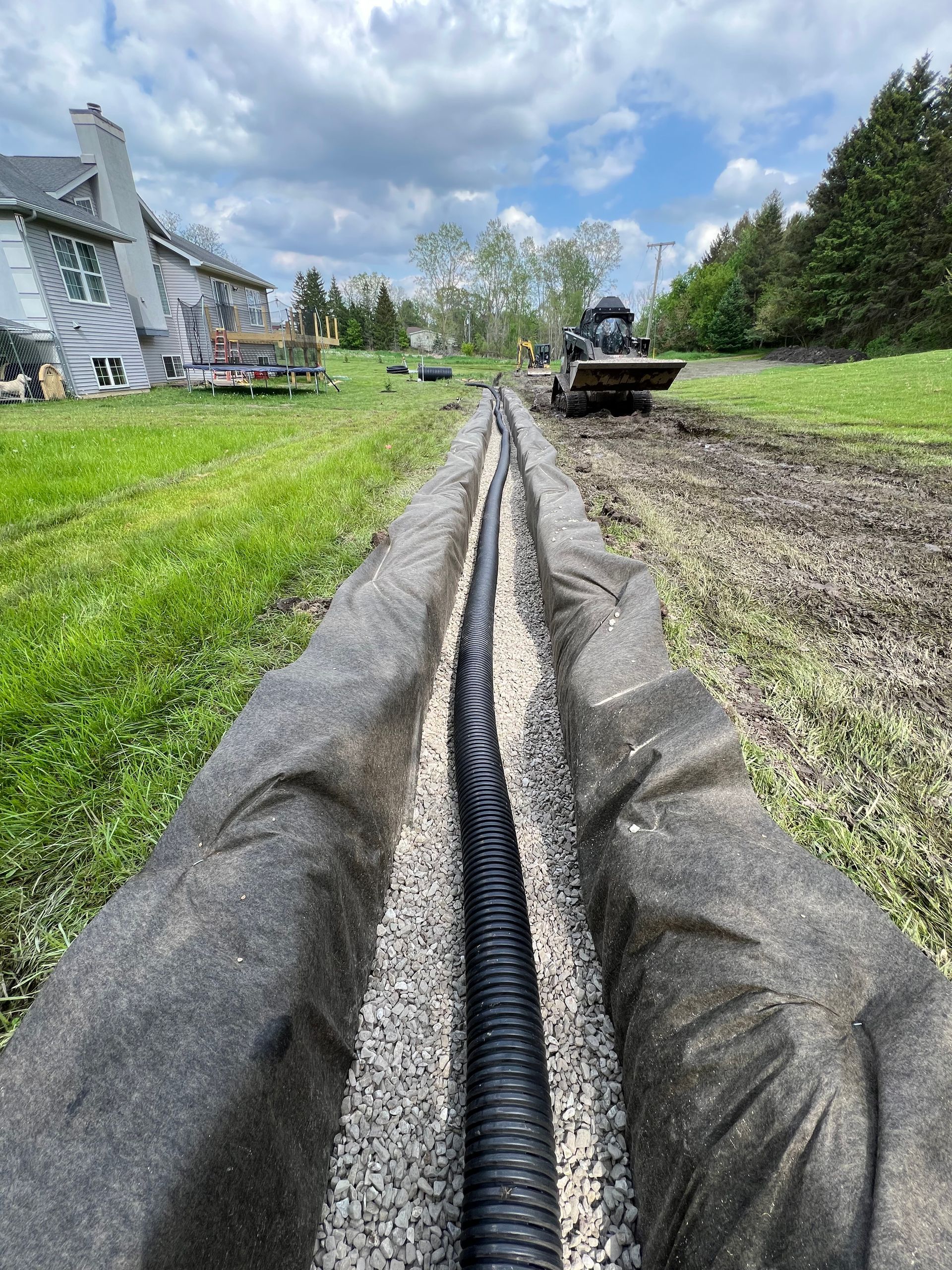
Drainage work involves identifying where water enters the property, where it accumulates, and where it needs to discharge, then installing grading changes, swales, or subsurface systems that redirect flow along controlled pathways. Surface grading moves water using slope and contour changes, while subsurface drains capture water before it reaches problem areas and convey it to discharge points away from structures and high-use areas.
Request a property drainage evaluation to identify water flow patterns and system options before seasonal weather worsens the problem.
What You Notice Once Drainage Systems Are Finished
Drainage installation begins with site analysis that maps existing flow patterns and identifies where water originates, accumulates, and exits the property, which determines whether surface grading alone resolves the issue or whether subsurface systems are necessary to intercept water before it reaches vulnerable areas. The system design establishes discharge points that move water to storm drains, swales, or areas where it can infiltrate without causing erosion or flooding.
Once drainage work is complete, water no longer pools near your foundation or collects in low areas of your yard during or after rain events. The ground around structures remains dry enough that soil doesn't saturate and create hydrostatic pressure against foundation walls, which reduces the risk of basement seepage and cracking. Driveways and walkways shed water quickly instead of developing standing puddles that freeze in winter or erode base materials, and outdoor spaces remain usable during wet weather instead of becoming muddy or impassable.
Drainage systems protect long-term property value by preventing foundation damage, driveway deterioration, and landscape erosion that escalate in cost the longer water problems go unresolved. Addressing drainage concerns before they undermine structural elements or create safety hazards avoids more expensive repairs to foundations, retaining walls, and paved surfaces later.
Answers to Frequent Service Questions
Property owners typically want to understand how drainage systems work and what changes they will observe after installation.
What causes standing water to appear near foundations and driveways?
Grading settles over time, soil compaction changes water flow patterns, or landscaping alterations redirect runoff toward structures instead of away from them, which allows water to accumulate in low areas where it infiltrates and causes damage.
How are drainage solutions customized for different properties?
System design depends on soil permeability, property slope, water volume during peak rain events, and the location of existing structures, which determines whether surface grading, subsurface drains, or both are necessary to manage runoff effectively.
When should drainage work be completed to avoid seasonal complications?
Installing drainage systems during dry periods allows proper excavation and compaction, while projects completed before spring thaw or fall rain seasons prevent water damage during peak runoff months common in Michigan.
Why does poor drainage lead to foundation problems over time?
Water that saturates soil near foundations creates hydrostatic pressure that forces moisture through walls and cracks, and freeze-thaw cycles in saturated soil cause heaving and shifting that compromises structural stability.
What should I look for to confirm drainage systems are working correctly?
Water should flow away from structures during rain, no standing puddles should remain after storms, and soil near foundations should remain firm rather than soft and saturated.
B&P Excavating LLC designs and installs drainage systems that address standing water, erosion, and foundation protection based on property-specific grading and soil conditions. Schedule a site assessment to review drainage concerns and system options for your property in Howell or surrounding areas.