Clear Overgrown Land Without Damaging Soil
Forestry Mulching in Howell for properties reclaiming access blocked by brush and invasive vegetation
B&P Excavating LLC clears brush, saplings, and invasive overgrowth using forestry mulching equipment that processes vegetation in place and leaves a protective layer of natural mulch across the ground. You use this service when overgrowth has limited access to trails, building sites, or recreational areas. The equipment grinds vegetation into mulch that stays on-site instead of requiring removal, which reduces erosion and retains topsoil structure.
Forestry mulching works differently than traditional clearing because it eliminates the need to pile, burn, or haul away debris, and it avoids the soil disturbance caused by bulldozers or root raking. The mulch layer protects the ground from runoff and helps decompose over time to improve soil quality. This approach applies to residential acreage, farms, hunting properties, future building sites, and trail systems where maintaining soil integrity matters as much as removing vegetation.
Schedule an on-site evaluation to determine the clearing approach that matches your property conditions and intended use.
What Proper Land Clearing Requires
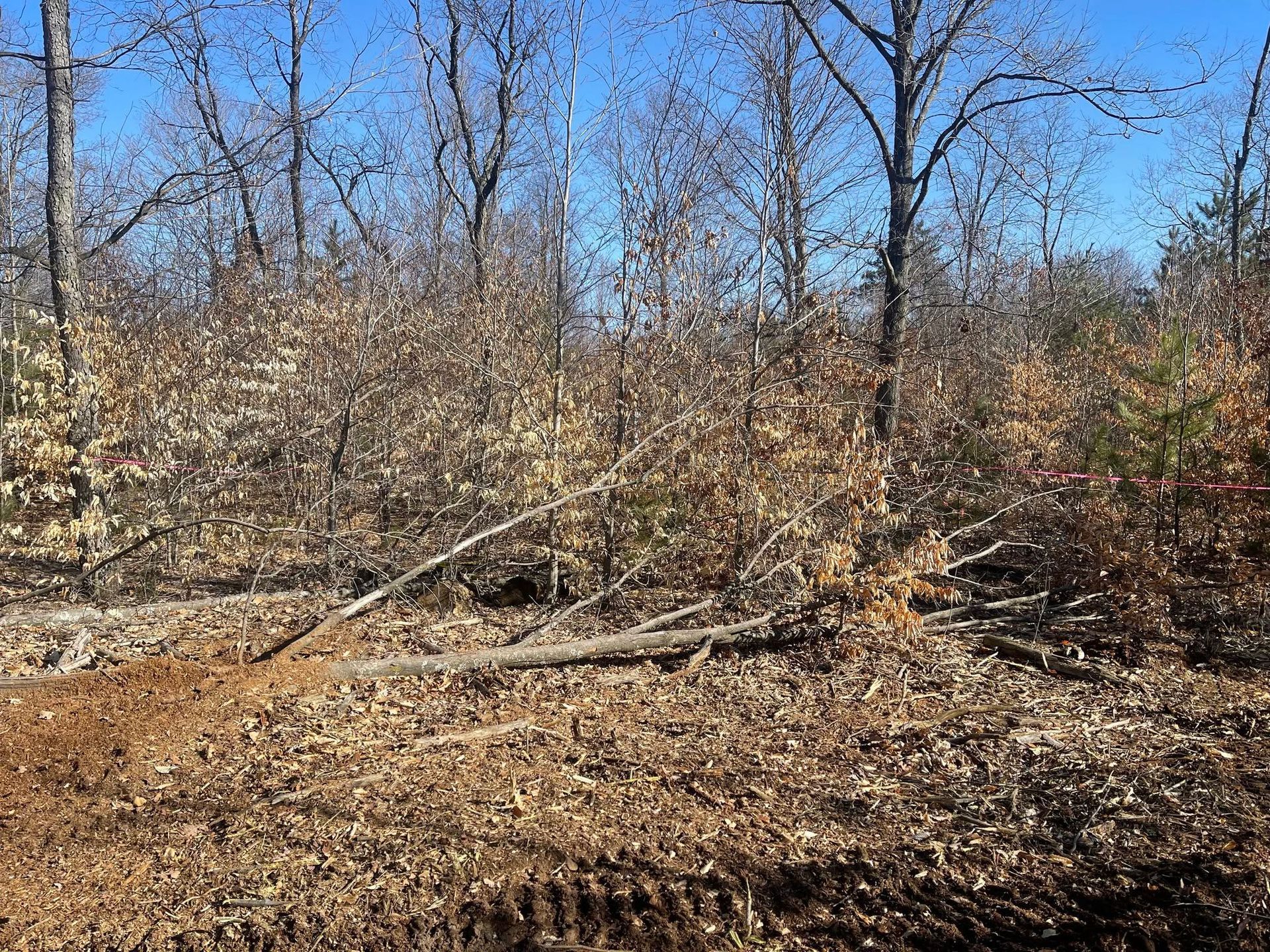
The mulching equipment processes vegetation at ground level and leaves behind a uniform layer of organic material that covers exposed soil. Larger saplings and brush are cut and mulched in a single pass, while invasive species are ground down to prevent regrowth from spreading across adjacent areas. The mulch layer settles into place and creates a mat that stabilizes the surface during rain events.
After clearing, the property shows visible pathways or open spaces where overgrowth previously blocked movement or sightlines. The mulched surface allows foot traffic and equipment access without creating ruts or compacted tracks, and the organic layer begins breaking down to feed the soil rather than eroding into low spots. Properties in Livingston County see improved drainage patterns once dense vegetation no longer traps water or blocks natural flow across sloped terrain.
Forestry mulching does not remove stumps or root systems below ground, so properties requiring full excavation for construction may need additional grading work after clearing. The service focuses on vegetation management and topsoil protection rather than site preparation for foundations or hardscape installation.
Questions Before Starting Your Clearing Project
Property owners preparing for land clearing often ask about equipment capability, timing considerations, and long-term site conditions after mulching is complete.
What size of vegetation can forestry mulching equipment handle?
The equipment processes brush, saplings, and small trees up to six inches in diameter, grinding them into mulch without requiring separate removal or burning stages.
How does mulching affect future vegetation growth?
The mulch layer suppresses weed germination and slows regrowth of invasive species by blocking sunlight from reaching the soil surface, though it does not eliminate root systems that may sprout again without follow-up treatment.
When is the best time to schedule land clearing in Howell?
Dry soil conditions from late spring through early fall allow equipment to access properties without creating deep ruts, though frozen ground in winter also supports machinery if the project cannot wait for warmer months.
What happens to the mulch after it is spread across the property?
The organic material decomposes gradually over one to three years, adding nutrients back into the soil and reducing the need for erosion control measures like silt fencing or straw blankets.
Can forestry mulching clear land near wetlands or protected areas?
Clearing near regulated zones requires coordination with local conservation authorities to verify setback distances and avoid disturbing protected vegetation or drainageways that feed into wetland systems.
B&P Excavating LLC evaluates site access, vegetation density, and soil conditions before clearing begins to confirm the approach matches your property goals. Request a site visit to review clearing options and receive a project estimate based on acreage and vegetation type.