Access Routes Maintained for Long-Term Use
Right of Way Clearing in Howell for utility corridors, roadways, fence lines, and access routes where vegetation blocks infrastructure and maintenance access
Overgrown vegetation along utility corridors, roadways, fence lines, and access routes blocks maintenance crews, interferes with infrastructure visibility and inspection, and creates fire hazards or safety concerns where brush encroaches on power lines, drainage pathways, or property boundaries. Right of way clearing removes trees and brush from designated corridors to maintain safe, accessible routes for utilities, municipal services, agriculture, and commercial operations. B&P Excavating LLC completes right of way clearing in Howell, Brighton, Hartland, and surrounding areas where infrastructure projects, agricultural operations, and property access depend on vegetation management along defined pathways.
Right of way work involves removing vegetation within specified corridor widths while protecting surrounding property and minimizing disturbance beyond the clearing limits. The process establishes clear access for utility maintenance, fence installation, roadway visibility, and long-term corridor management without requiring frequent reclearing due to incomplete removal or regrowth from root systems left in place.
Discuss right of way clearing requirements to establish corridor widths and vegetation management specifications for your project.
Why Corridor Clearing Works for Infrastructure Projects
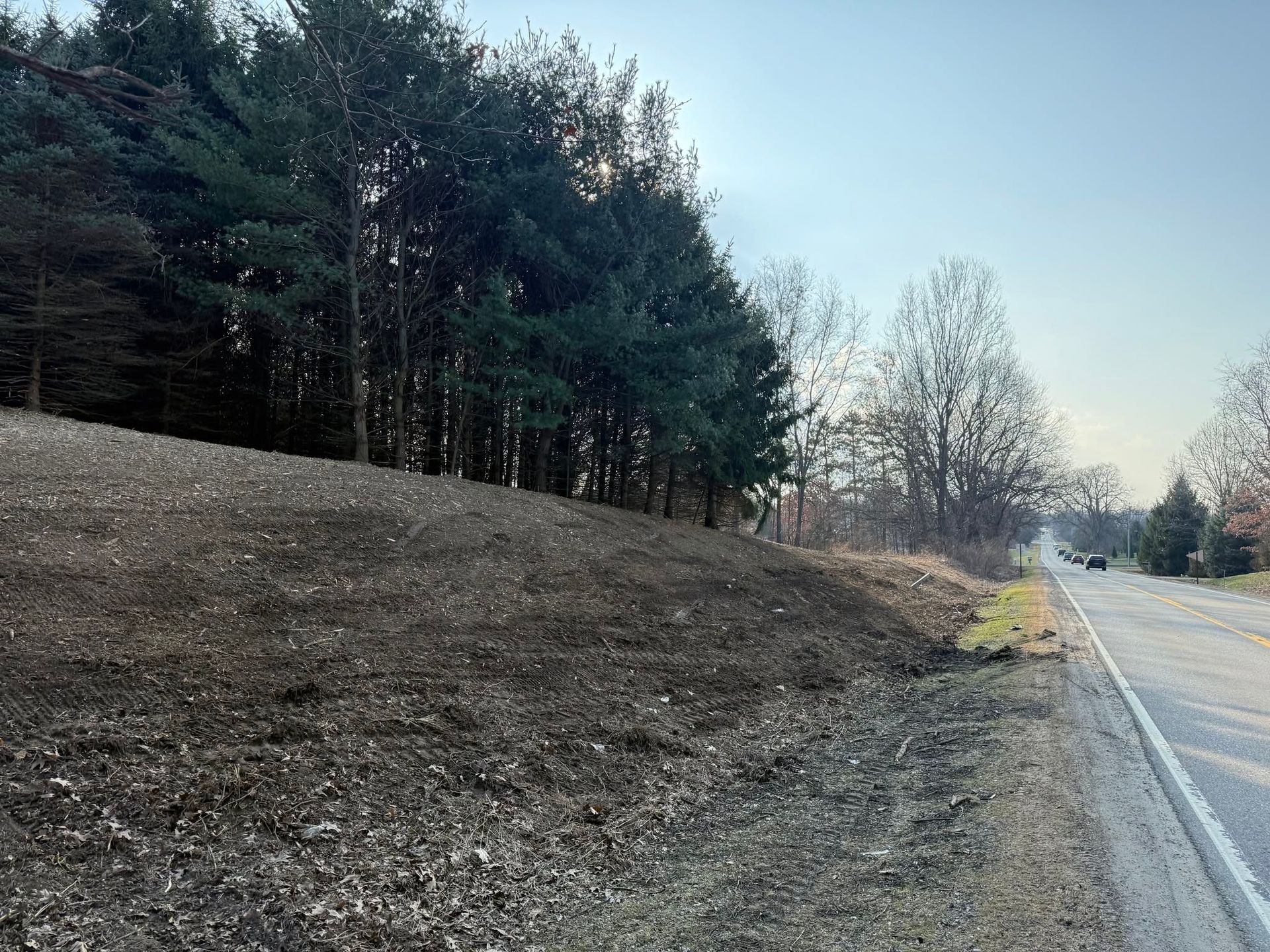
Clearing work targets vegetation within the right of way boundaries using equipment that removes trees, brush, and root systems without encroaching on adjacent property or damaging infrastructure already in place. The corridor is cleared to the width required for safe access, equipment operation, and ongoing maintenance, and debris is managed to keep the cleared area functional and accessible immediately after work is completed.
Once right of way clearing is finished, the corridor is visibly open from end to end without trees blocking sightlines, brush obstructing access, or vegetation interfering with utility lines, drainage systems, or fence installation. Maintenance crews and equipment can travel the full length of the corridor without maneuvering around obstacles, and inspection work proceeds without clearing additional vegetation each time access is needed. The corridor remains passable during wet weather because vegetation removal prevents root systems from destabilizing roadway surfaces or blocking drainage pathways.
Efficient corridor clearing supports project timelines by completing vegetation removal in coordination with utility installation, fence construction, or roadway maintenance schedules, which prevents delays caused by clearing work that overlaps with other trades already mobilized on site. Cleared corridors are easier to maintain long-term because vegetation regrowth is controlled at the source rather than requiring repeated mowing or trimming of brush that was cut but not removed.
What Property Owners Usually Ask
Right of way clearing involves coordination with infrastructure projects and property boundaries, and understanding the process helps you plan around timelines and access requirements.
What defines the boundaries of a right of way corridor during clearing work?
Corridor boundaries are established by easement agreements, utility specifications, municipal requirements, or property surveys that designate the width and location where vegetation must be removed to maintain access and infrastructure clearance.
How is surrounding property protected during right of way clearing?
Equipment operators work within defined corridor limits, and clearing methods are selected to avoid damage to vegetation, structures, or terrain outside the designated right of way area.
When should right of way clearing be completed relative to other project activities?
Clearing is typically scheduled before utility installation, fence construction, or roadway maintenance begins, allowing debris removal and corridor preparation without interfering with crews and equipment working on infrastructure tasks.
Why does Michigan vegetation require complete removal rather than just trimming?
Woody species common in Michigan regrow aggressively from cut stems and root systems, so removing vegetation at the root level prevents frequent reclearing and maintains long-term corridor accessibility and safety.
What should I expect during right of way clearing work?
Vegetation is removed within the specified corridor width, debris is hauled or managed according to project requirements, and the cleared area is left accessible for equipment and maintenance crews without obstacles or leftover root masses.
B&P Excavating LLC coordinates right of way clearing for utility corridors, roadways, fence lines, and infrastructure projects that require dependable access and long-term vegetation management. Schedule a consultation to review corridor specifications and project timing based on your clearing requirements in Howell or surrounding areas.