Sites That Support Long-Term Structural Integrity
Site Preparation & Building Pads in Howell for properties where stable foundations depend on proper grading and soil work before construction begins
B&P Excavating LLC completes site preparation and building pad work in Howell, Brighton, Hartland, Fowlerville, and surrounding areas where successful construction depends on stable, properly graded surfaces before foundations are installed. When you plan a new home, pole barn, commercial building, or agricultural structure, the ground beneath it must be excavated, compacted, and graded to support years of structural performance without settling or shifting. The company coordinates drainage planning and soil preparation during the site work phase to prevent water infiltration and soil instability that typically cause foundation problems later.
Site preparation involves removing topsoil, excavating to the required depth, installing proper drainage pathways, and building a compacted pad that distributes structural loads evenly across the footprint. Drainage coordination during this phase prevents water from pooling under or around the structure, which can weaken soil bearing capacity and lead to differential settling. The grading work establishes positive drainage away from the building pad so runoff moves toward designated discharge points rather than soaking into the base materials.
Schedule a site evaluation to review grading requirements and drainage planning before your project timeline begins.
What Proper Building Pad Construction Requires
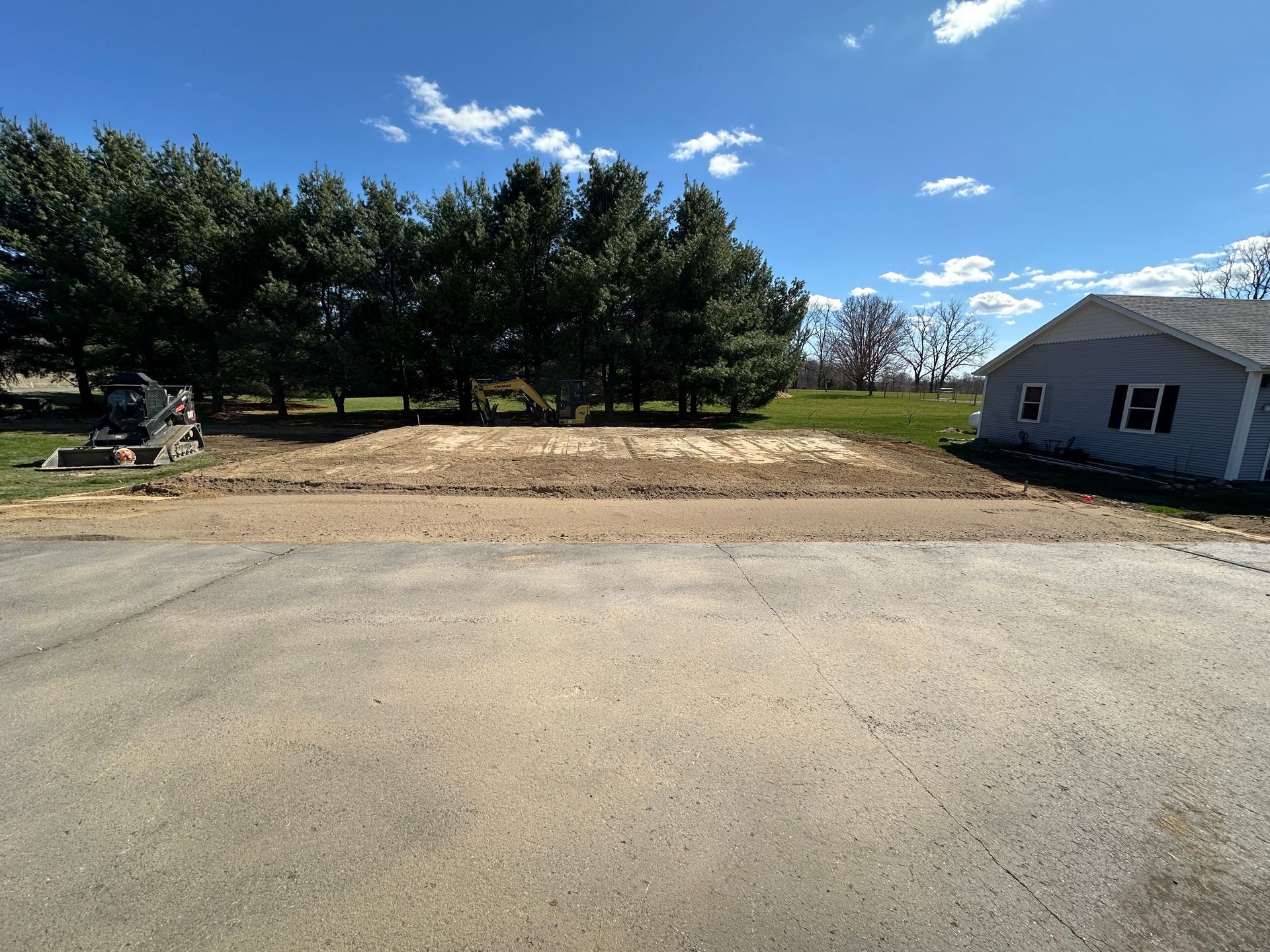
Building pad work begins with excavation that removes unsuitable topsoil and organic material, then proceeds with compaction of subgrade layers using equipment that achieves density levels necessary for load-bearing stability. The pad surface is graded to specific elevations that align with your building design and ensure positive drainage away from the foundation perimeter.
Once the building pad is complete, you will see a level, compacted surface at the correct elevation with defined drainage pathways that direct water away from the construction zone. The soil is firm enough to support heavy equipment during construction without rutting or shifting, and the grading prevents water from flowing toward the structure during rainfall. The pad remains stable through seasonal freeze-thaw cycles because proper compaction and drainage reduce the risk of frost heaving and soil expansion.
Early project planning allows site preparation to align with your construction schedule, reducing delays caused by weather, equipment availability, or unforeseen soil conditions. Coordinating drainage work during pad construction prevents the need to retrofit systems after the foundation is in place, which costs more and disrupts other trades already working on site.
What Property Owners Usually Ask
Site preparation timing and coordination affect your overall construction schedule, and understanding the process helps you plan around weather conditions and contractor availability.
What happens during site preparation before the building pad is constructed?
Topsoil is stripped away, the subgrade is excavated to design depth, and drainage pathways are established before any compaction begins.
How does drainage coordination during site work prevent future foundation problems?
Drainage systems installed during excavation direct water away from the building pad before the foundation is poured, which prevents soil saturation and settling that occurs when water infiltrates base materials.
When should site preparation begin relative to the rest of the construction schedule?
Site work should be completed and inspected before foundation contractors mobilize, allowing time for any adjustments to grading or drainage without delaying subsequent trades.
Why does Michigan soil require specific attention during building pad construction?
Seasonal freeze-thaw cycles cause frost heaving in saturated soils, so proper drainage and compaction during site preparation reduce the risk of soil expansion that can damage foundations over time.
What should I look for to confirm a building pad is properly prepared?
The surface should be level and firm without soft spots, drainage pathways should direct water away from the pad, and elevation should match your building plans to avoid regrading later.
B&P Excavating LLC coordinates site preparation and building pad work with attention to drainage planning and soil conditions that affect long-term structural performance. Request a property evaluation to review grading requirements and project timing based on your construction schedule.